Cooper Campen: Jeb Bush called Florida school choice his “dream come true.” I’m one of the students living it.
Letter to the editor
My name is Cooper Campen, and I’m 14 years old. I’ve never known a Florida without school choice. I’m a homeschool student, I take math at The Frazer School in Gainesville, I dual enroll at Santa Fe College, I take some classes online, and I’ve taken classes and been in clubs at public school. My family takes different educational opportunities and puts them together in the way that works best for me.
That’s pretty normal now in Florida, but it wasn’t always this way.
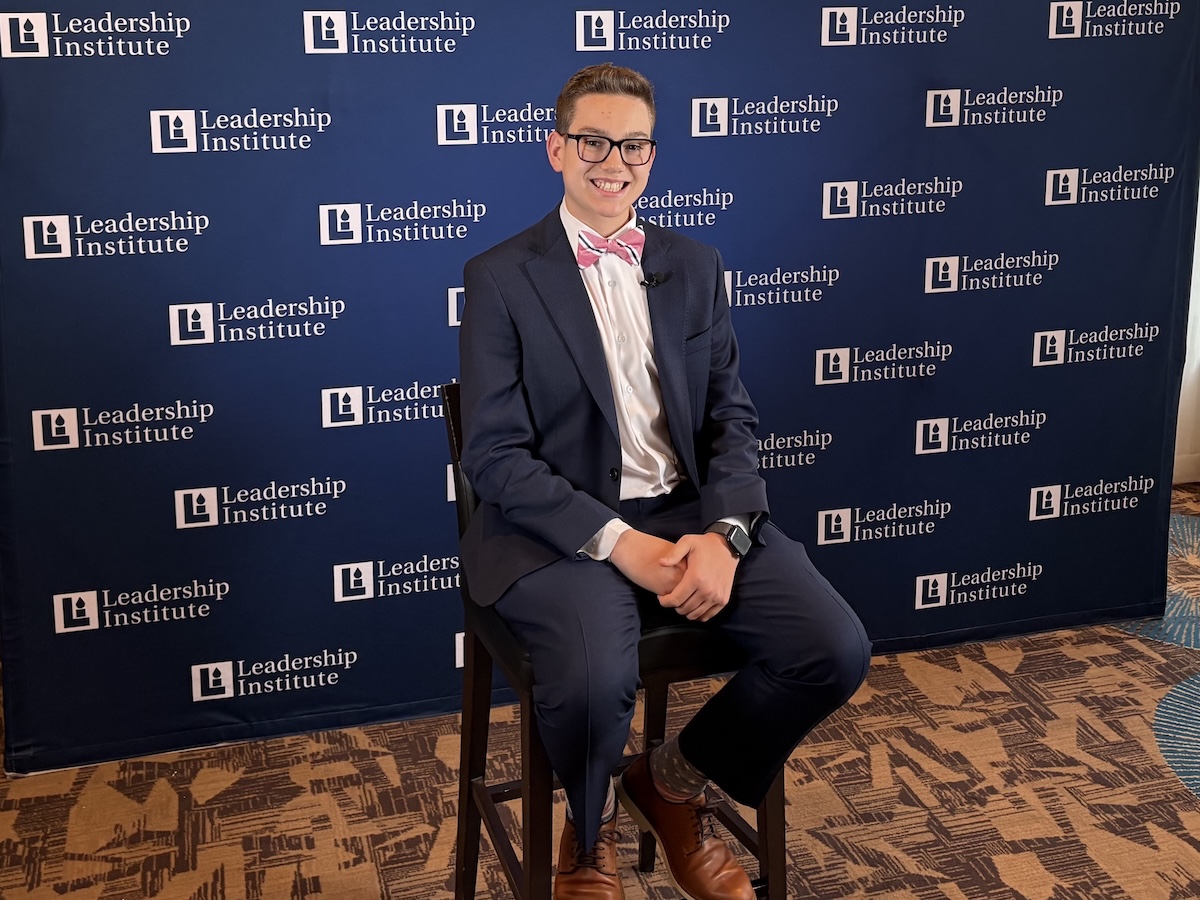
A few weeks ago, I had the honor of hosting former Florida Governor Jeb Bush for a conversation with about 50 students at The Frazer School.
Bush took office as governor in 1999, about 13 years before I was born. He expanded charter schools, pushed greater accountability, and enacted the nation’s first statewide private-school voucher program.
I asked him what it was like to see what school choice has become in Florida today.
“It’s my dream come true,” he said. But then he added, “It’s not quite there yet.”
Bush explained that his passion for school choice starts with something simple: All kids are different. We learn differently and at different paces. What works really well for one student might not work for another. Parents know their children best and should be able to choose the education that works best for them.
Florida has come a long way in recognizing that. By the 2024-25 school year, 53 percent of Florida’s K-12 students, about 1.9 million children, were participating in some form of school choice.
Being automatically tethered to a school because of where you live is a pretty outdated way to think about education. Humans like to have choices, and we make choices in every important part of our lives. Why is finding the right education for your child different?
I have personally benefited from Florida continuing to expand those choices. In 2023, state Rep. Kaylee Tuck sponsored House Bill 1, which Gov. Ron DeSantis signed into law. Among other things, it created the Personalized Education Program, or PEP, that I use today.
What really interested me was when Bush said, “It really doesn’t matter where a child goes. It’s the parents’ decision.”
I think that’s an important distinction because sometimes the debate over school choice becomes an argument over which system we are supposed to protect. But the whole reason we have publicly funded education is to educate students.
The public school student matters. The private school student matters. The charter school student matters. The homeschool student matters. Every student matters.
“Parents will make a better choice for their own child than the government,” Bush told us. “Always believed it, always will.”
None of that means public schools have to lose when families gain more choices. A major study of Florida’s school-choice program found that as competition increased, students who remained in public schools also benefited, with higher test scores and lower absences and suspension rates.
That makes sense because competition tends to make things better. It is what took us from the Model T to the Tesla and from the landline to the iPhone. If families have choices, schools have a reason to ask what they can do better and what they can offer that families want. When that competition causes a public school to improve, then the student who never leaves that school has benefited from school choice, too.
There is also a connection between Bush’s education reforms and The Frazer School that I didn’t fully appreciate until recently. Our founder, Mr. Will Frazer, told me that an alternative teacher certification pathway expanded during the Bush administration was instrumental in allowing him to remain a teacher early in his career. Without it, Mr. Frazer said he probably would have quit teaching before really getting started.
Mr. Frazer went on to build the Buchholz High School math team that won 16 Mu Alpha Theta national championships in 17 years. He later founded The Frazer School, which won national math championships in each of its first two years of competition.
That’s a pretty incredible ripple effect from an education policy decision made more than 25 years ago. It also worked out pretty well for those of us who get to learn at Frazer.
When I told Bush that story, he said something that immediately made me think of our school.
“Everybody will rise to the occasion if you raise the bar,” he said.
He explained that when expectations are high, students don’t just work harder themselves. They start helping each other out to reach that standard. Anyone who attends Frazer knows exactly what he meant.
Near the end of our conversation, I asked Bush how he managed to accomplish something political leaders had been talking about for decades.
His answer wasn’t complicated.
“Do what you say you’re going to do,” he told me.
Then he said, “Be big and be bold.”
“Success is never final. Reform is never complete.”
That’s basically what has happened with school choice in Florida. The reforms Bush began when he took office in 1999 made more reforms possible. Other governors and legislators kept building on them.
I’m one of the students benefiting from it, but I’m certainly not the only one. The student who finds the right private school benefits. The homeschooler benefits. The student who discovers a charter or magnet program that fits benefits. And when competition makes a traditional public school better, the student who never leaves his neighborhood school benefits, too.
That’s what I took away from my conversation with Gov. Bush: School choice really shouldn’t be about which kind of school wins.
Schools exist for students, not the other way around.
The full conversation with Gov. Bush can be watched here: https://youtu.be/Y7wUkhnDHRg
Cooper Campen, 14, is a homeschool student in Gainesville, Florida, who dual enrolls at Santa Fe College and attends The Frazer School. He is the founder of The Frazer School’s Teenage Republican Club and serves as Chairman of the Florida Federation of Teenage Republicans. He is a three-time Alachua County Spelling Bee champion and competes in speech and debate. He is particularly interested in educational freedom policy, government, engineering, and civic engagement.
The opinions expressed by letter or opinion writers are their own and do not necessarily represent the views of AlachuaChronicle.com. Assertions of facts in letters are similarly the responsibility of the author. Letters are limited to 1,000 words; they may be submitted to info@alachuachronicle.com and are published at the discretion of the editor.
The community and nation does better as a whole when freedoms of thought, including speech, press, assembly and religion, are allowed to flourish. So everybody reaches their potential, we all benefit.
Other places suppress potential for political and criminal reasons. That’s different.
I wish this was available when I was in school. (Buchholz Class of 73)
Wonderful kid. I wish this were possible for students with special needs. We are far from respecting their rights in public schools.
That’ s fine and good luck to Cooper, but “school choice” now means tax payers are paying for selective private schools without the requirements now underfunded public schools face to mee the law. Private schools have existed in the past,but parents paid for them.
““In 2023, the Republican-led Florida Legislature passed a bill that eliminated the income requirement for families to receive the vouchers, About 69% of students new to using the voucher were already enrolled in private schools, according to Step Up for Students, the nonprofit in charge of the scholarships……and paying for it out of pocket.
“Our public schools are struggling to make ends meet,” said Andrew Spar, president of the Florida Education Association. “That means fewer programs for kids, larger class size for our students. It also is impacting teacher pay.”
“Florida ranks 50th in the nation in average teacher pay, at $54,875”
…. while we are paying for private schools for the wealthiest families in Florida.
https://www.wuft.org/text/fresh-take-florida/2025-12-01/private-school-vouchers-in-florida-redirecting-funding-away-from-public-schools
While that is a good point, the US government already funds services without forcing providers. SNAP, Medicare/Medicaid, the GI bill, these are all funded by the government. And yet, if you are on snap you don’t need to go to a government commissary, if you are on Medicare you get to keep your doctor, and the GI bill allows private and public institutions along with various other programs. We are allowed to make choices in every important part of our life, why should school Choice be different? Furthermore, studies (most specifically, Figlio et al 2022) have shown that when competition increases, the public schools test scores go up, suspension goes down, and SMALLER class sizes (due to less students).
This fellow ought to qualify for an all expense paid trip to Nerdsville.
“In the first place, God made idiots. That was for practice. Then he made school boards.”
-Mark Twain
Jeb’s policies did this-
• “Teaching to the test” and high stakes attached to a single exam
• Public schools losing funds to vouchers and charters
• Low teacher pay and school funding
• Grading-formula changes that made comparisons murky
His legacy is still debated, and his model was copied in other states. Economists and educators disagree on how much of Florida’s gains came from his policies versus other factors.
IB, Cambridge and Frazer shows how public schools can identify students and enhance their learning experience with likeminded students.
Other programs and activities abound for parents that seek them out.
No need to have the state pay private school tuition, especially for religious instruction, stay at home parenting or social status. Furthermore keeping track of the fund is important too….”according to a state audit. Florida’s Auditor General released a report last fall on the roughly $4 billion voucher program, and it showed the Department of Education ran a $398 million funding shortfall. The audit also found voucher funding organizations received $398 million more than what was originally allocated to them.
BTW Republican candidate for Governor Byron Daniel’s Disclosures: Byron Donalds amended his financial disclosures in August 2025, after Florida Bulldog found he hadn’t fully reported her stakes in companies serving the charter chain. The amended filing showed she held stakes in two of those firms, each worth between $1 million and $5 million.
• Conflict-of-interest concerns: Ethics watchdogs and public education advocates say a governor whose spouse runs businesses serving charter schools could face conflicts of interest. The Donalds campaign argues her work doesn’t create one, and Erika Donalds rejects the criticism.
The world is complicated, study and learn. All the Best.
Shining, all your examples except Medicare are needs based, not subsidizing the better off for a costly alternative to what we already provide to all comers, including the challenged of all types.