
First UF Health patient receives specialized treatment for advanced colorectal cancer
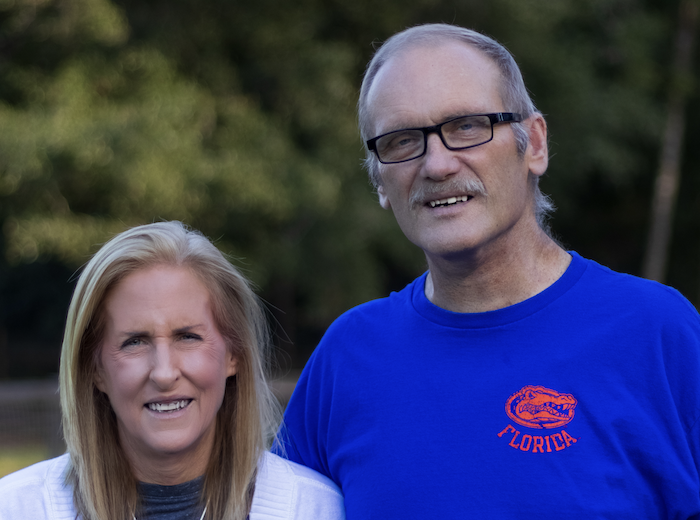
Press release from UF Health
BY LEAH BULETTI
GAINESVILLE, Fla. — With Stage 4 colorectal cancer that had spread to his liver, Stephen Hutto had limited options. Despite surgery and dozens of rounds of chemotherapy, the cancer kept coming back.
Then the chemotherapy began to damage his heart and cause other debilitating side effects.
Hutto, 69, needed a new therapy. Now, the Ocala man is the first patient at University of Florida Health to receive a hepatic artery infusion, or HAI, pump. It’s an advanced treatment that implants a pump in the abdomen to directly target liver tumors.
The pump allows patients to receive high doses of chemotherapy through the liver’s blood supply, while minimizing side effects from chemotherapy. Data show the pump can help reduce the size of tumors and help patients live longer. In some cases, it can shrink them enough that they can be surgically removed.
The therapy can also be used after patients undergo surgery, as in Hutto’s case, to reduce the risk of the cancer returning.
“It means a great deal. There wasn’t really a lot to look forward to. It was a pattern of going back on chemo every three months,” Hutto said. “Now, I feel pretty confident that this cancer is going to be gone away from me for quite some time. I have a lot to live for, and this situation is very encouraging for me.”
The HAI pump program provides a new treatment option for select patients with colorectal cancer that has spread to the liver or those with a rare bile duct cancer, said Patrick Underwood, M.D., who is treating Hutto.
“Establishing this program at UF Health will give patients in Florida and the surrounding region access to another treatment strategy within a comprehensive cancer program, with the goal of improving long-term outcomes and maintaining quality of life,” said Underwood, an assistant professor in the UF Department of Surgery and a member of the UF Health Cancer Institute.
UF Health is one of only a few programs in the state to offer the therapy.
“It’s one component of UF Health’s broader approach, including clinical trials, that ensures patients facing cancer have access to the newest, leading-edge treatments,” Underwood said.
Hutto was first treated for colorectal cancer in 2017 after a colonoscopy. Colonoscopies are the gold standard to screen for colorectal cancer, now the deadliest cancer in U.S. residents under 50.
Because it was caught early, doctors were able to remove the tumor and Hutto was cancer-free for several years. But at the end of 2022, he saw blood in his stool, a major warning sign for colorectal cancer. Doctors found a tumor the size of a golf ball in his rectum. Hutto underwent 30 rounds of radiation and nearly 50 rounds of chemotherapy.
“It didn’t change the tumor at all, so I had to have my rectum taken out,” he said.
After the surgery, Hutto had scans every three months. In what became a grueling pattern, he would resume chemotherapy every few months as the cancer repeatedly returned to his liver. In March, after eight tumors were found, Hutto resumed chemotherapy again.
This time, though, the side effects began to accumulate.
“This was the first time the chemo ever attacked my heart and I was having a lot of trouble,” he said.
Hutto was referred to UF Health, where he met Underwood, as well as gastrointestinal medical oncologist Lakshmi Balasubramanian, M.D., and surgical oncologist Ibrahim Nassour, M.D., who lead the program.
The program is an excellent example of collaboration across medical specialties, said Nassour, an assistant professor in the Department of Surgery.
“This program expands the treatment options available to patients with complex cancers at UF Health and allows us to offer a therapy that was previously unavailable at our institution,” he said.
Balasubramanian, medical director for GI oncology regional therapies in the UF Division of Hematology and Oncology, added that establishing the program “shows what we can achieve when our goals are aligned around offering comprehensive, multimodality care under one umbrella.”
With colorectal cancer rates increasing among younger people, Hutto stresses the importance of getting screened early. Colorectal cancer is one of the most preventable cancers through screening, which is recommended for everyone ages 45 to 75.
“If you have symptoms, don’t push them away,” he said. “Don’t put it off. You need to go get tested and you need to go get screened.”
After a smooth surgical recovery, Hutto receives regular infusions of chemotherapy through the pump. And he prioritizes staying active and living a full life.
“I have six grandchildren, I have three kids, I have a wonderful wife, and I have a good life,” Hutto said. “I have a lot to live for, and I don’t let cancer dictate how I live.”
“They came to the decision that the hepatic pump was the best decision for me,” Hutto said. “I thank God every day that that option was available and they chose me as the patient. I feel very good about the future and what it holds for me.”